Thursday, March 28, 2013

Winning Resumés And Cover Letters

Yo yo yiggity yo! Here's me, just Mining my own business! 


This week was a very stressful week for me. I've felt overwhelmed and unsure of my future. In order to grab the bull by the horns and make myself feel better, I went to the Career Center for a seminar on how to make a successful resumé and cover letter. My future is near, and I need to make sure I will be okay after college, let alone now while I'm still here. 


As you can see the crowd was huge. It was a ghost town. This seminar turned into a one on one date with me and Mr. Michael. He taught me hands on what I needed to know. (Get your mind out of the gutter).


He had a cute lil tush too. Made my day a little brighter. 
Michael is trained by the university's College Of Business to teach students how to talk in interviews and career fairs as well as how to dress for success. I'd love to teach HIM how to dress for success myself...some leather pants, a little eyeliner, and some pressed powder would benefit him. 

Today, the subject was resumés and cover letters. I'm glad I came to this...I learned a lot about the two that I didn't know about. 

For starters, the purpose of a resumé is to impress the employers and showcase writing skills. In this, you are documenting qualities and experiences to demonstrate your overall well-roundedness. Necessary components, obviously, are contact information and name at the top. Your name should stand out...make it sparkle baby. When filling out education, avoid high school education. As for work experience, include present job and leadership experiences you are currently involved in.  Optional parts of a resumé are a job objective, relevant coursework, professional organizations, and study abroad information. Optional components that are smiled upon by most companies are honors/rewards, certifications, and skills. Transferable skills for any general job, if you need filler, are communication skills, teamwork, and strong work ethics. 

Bullet points are the main points of a resumé. Use action words in them to make the sentences stand out and to ensure the verbs. Any bullet point is stronger if you quantify. For example, instead of just stating what you did on the job, describe how or why you did it, and what you benefited to the company. Something I learned that I didn't know was that a resumé should never include periods at the end of your sentences. 

Ex: -"Was a waiter and took orders."
 should look like...
-"Served hundreds of customers monthly and helped increase restaurant sales by 60%"

Companies love to see numbers and statistics. Always remember to stress your compliments, oversell instead of undersell, and appear aesthetically balanced. NEVER lie, don't talk about high school at all, do not include extraneous skills, avoid using the same action words, don't include current or expected salary, leave out your religion, race, or ethnicity, and never include for leaving a job.

After this, we moved on to cover letters. This is really your chance to showcase your writing abilities to the company. The main point of a cover letter is to expand upon the most important experiences on your resumé. Here, fell free to indicate interests, passions, and knowledge of the company. In the cover letter, you are more likely to get the recruiter's attention than in the resumé. Exemplify your fit for the position, include where and how you found the job opening, and most importantly include internal networking contacts if you have any. Never be blunt about requesting an interview.

When starting off the cover letter, use a colon in the header.

Ex: "Dear Miss Moss,"
should be...
"Dear Miss Moss:"

You include a colon because comas are for writing to people you know personally. ALWAYS thank the recruiters for their time and consideration. Address a direct name in the header of the cover letter if you know who will be reviewing your resumé. The last thing I learned that I wasn't aware of was the fact that you aren't supposed to include your references on the resumé. If you want to send in your references with your content, you include them on their own page.

Well, I better get to correcting before I start sending them out there.

See you next week!

MWUAH <3  

Tweet This

Friday, March 22, 2013

GWS 325: Lesbian & Queer Media Culture

Hello my Pretty Little Miners!!! Today, I'm Bloody Mary.


I won't cry for you. I won't crucify the things you do.

This week, I went to a class with my good friend Taylor. She's a cool cat. Meow. Say hi!!!


Such a cutie. Anyway, she's been telling me to come with her to this class all semester because she thought I'd really find it interesting. It's a Gender Women's Studies course about Lesbian & Queer Media Culture. Meet the class.


I felt kind of weird taking pictures in this small room but OH WELL. I'm still fabulous.
This class, we were given two readings about gay life in America that were extremely interesting. One was "The Sixth Man" by Jess Stearn. I loved the cover of the book. 


Of course, we didn't read the whole book, just selected chapters from the teacher. This book was published in 1962, and was educating America on the fact that one in every six man is gay. This book created a huge paranoia in the United States during this time. The teacher explained that Stearn was trying to make a comment on McCarthyism with the title of this book. McCarthyism is a campaign against alleged communists in the U.S. government and other institutions carried out under senator Joseph McCarthy. The other reading we focused on was "Gay New York" by George Chauncey.  


The selected chapters we read from both books were about Gay Culture in America. In Stearn's book, she focuses on why Gym Culture is so gay. It shows bodies in a very homo-erotic manner. In this time, casual sexual encounters took place in all male gyms pretty frequently, and kept a secret all through the 20's-60's. The men didn't even care if the wife found out because in 1920, the men ran the household and "she'll stay with me because I'm the man". She collected all of her data from police reports and court records reported by women. Domestic fights would break out from these arguments, and women would call the police just to report the infidelity of their husbands with men at the gym. A lot of these women wouldn't have sex with their husbands anymore after they fond out, and this caused even more domestic abuse reports. Another example was when a gay man hit on a police officer that was off duty, not knowing he was a cop. The cop told the gay man to meet him at the same spot tomorrow. The police showed up with a whole squad and brutally beat up this man, not because he was having gay sex, but because he was expressing his sexuality. 

The other reading put gays in a pretty negative light. Chauncey asked around geographically to gym owners, lawyers, judges, and police about their opinions of the lifestyles of gay men. The book doesn't seem to be negative in the sense where it's mean or nasty, but rather not what you would have expected. Basically, the majority opinion from 1890-1940 was that gay men are responsible for interrupting the social order of America. Like Stearn, he also found proof through police records. America thought gays disrupted normativity, so they wanted to try and make their lives miserable by not hiring them, bashing them in the streets, etc. It got so serious to the point where if a man married to a woman was caught cheating with another man, he wasn't considered to be in the wrong but rather "gayed" by the homosexuals. It was always the gay's fault. 

Stearn made a point that really stuck with me. Gay men are already emasculated and considered "less of men" by most heterosexual men...even today. Some heterosexual men also believe that gay doesn't exist, but men sometimes just choose to partake in gay behavior. It's already queer to be a woman and looked down upon. Gays, in this sense, are two times looked down upon because "they are choosing to be a non man". I really like how she explained this thought, and it makes me want to read the rest of her book so I just might! 


Well, that's all my little miners.

See you next week!

MWUAH <3
Tweet This

Friday, March 15, 2013

Patrik 1.5-Sweden, 2008 Movie Viewing

Hello, can you hardly wait for Spring Break? Hopefully you don't get yourselves into a wet t-shirt contest or anything. Today, my lips are pink. What color are yours? 


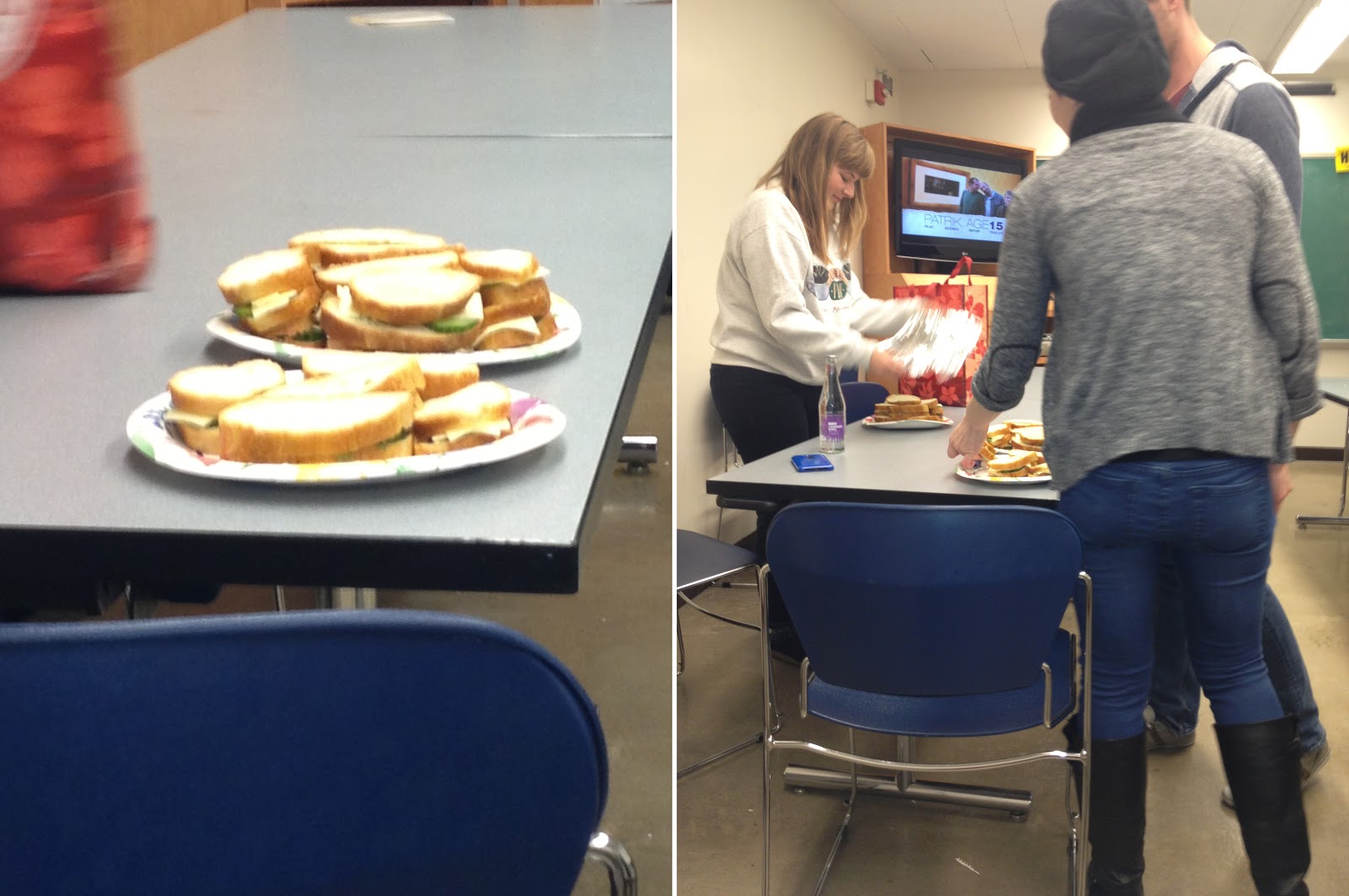
I went to an event at the Foreign Language Building on campus. It was Scandinavian night, and there was literally NOBODY there but myself and two other people. The plus side, they made us these cute Scandinavian sandwiches to snack on. 


As you can see, it was a small classroom with a small television. I'm guessing not a lot of people showed because many are already home for Spring Break. The crowd looked sad. Anyway, I chose this event because the movie sounded really interesting to me because it was about a gay couple who was trying to get a baby. I didn't know if it was a documentary or a fiction, but I was still interested nonetheless. 

It turns out it was a fictitious film, but it turned out really good! The only thing I didn't like about it was the small subtitles on the little television screen. My eyelashes were getting in the way of my reading. 


Movies with subtitles annoy me. Anyway, the film starts off by introducing the main characters, Sven and Goran. They are the gay couple wanting to adopt a baby. In preparation to do so, they begin to create a nursery together for their child in their new home. They leave the city life, which they both love, and relocate to a smaller, quiet village in the country. During the move, the local community isn't exactly the most welcoming to the gay couple. Some treat them with blatant hostility, while the rest of the villagers are content to simply shun them and pretend they aren't there. The couple was having a hard time with the move, and to add on to the stress, the adoption agency told them that an international baby was out of the question because no country thought that gay parents were fit parents. Another dream crushed for the two, but they nonetheless decide to adopt a local baby. They go through all of the paperwork with the agency, and agree to adopt Patrik, age 1.5. However, when the child arrives to the picket fence home, it quickly becomes apparent that someone misplaced the decimal point on the age of the adoption papers. Patrik is a 15 year old boy. If that wasn't enough to set them over the edge, the boy is extremely homophobic and not happy about being adopted by gay men. The child also has a criminal record. Assuming it's a mix-up, the couple returns to the office, but they have to wait until Tuesday to contact Social Services. Over the weekend, the house is very tense. The child accuses the gay men of wanting to molest him due to stereotypes he's heard, and Sven thinks the little boy will stab him in his sleep. Goran, in contrary, is more into the adoption than Sven is, and decides to befriend Patrik until Sven can find him a more suitable home. Goran and Patrik share a lot of personal feelings with eachother, and bond through gardening. Sven, still afraid of Patrik and his hostility, keeps a distance, which also creates a cold distance in his relationship with his husband. Patrik opens up old wounds for Sven, making him question his ideals of marraige, and revealing his long-buried feelings about his abandoned daughter from a previous heterosexual marraige, who is going through a goth phase of adolescene. Sven also has a past with violence and substance abuse, which is beginning to resurface due to his stress level. In the end, Sven chooses to leave Goran after he refuses to kick the boy out on the street. Now, Goran and Patrik are living together alone, and Goran grows to except the boy even though he still accuses him of being a sterotypical gay pedophile. Goran decides to take care of him until the agency finds a better suited home. Days later, the agency finally notifies Goran that they have found a family. Sven arrives back at the house before Patrik leaves and realizes that the child wasn't worth ending their marraige over. Patrik's new father picks him up shortly after Sven arrives and takes him. A few weeks later, Patrik arrives at the door of the gay couple and asks them to be his parents again. The three live together happily in the end.

This movie was extremely interesting to me. Aside from the subtitles, I'm really glad I came to this event. Goran and Sven have their troubles, but their troubles are not that different from those of a heterosexual couple if they were going through the same situation. I also related to the parts of the film where the couple felt shunned outsiders of their new community. I feel that way quite often in this shitpot of a world. Most importantly, I found Sven inspiring. He does get a bad wrap because he left his husband, but he delivers a message about the strength of love and the power individuals have to change.


I'll see you next week my loves!

MWUAH <3


Tweet This

Friday, March 8, 2013

Gunning For Campus: Examining the Impacts of Gun Violence on College Universities.

Hi my cuties!!!!! Today, I'm little Red Riding Lips! Be a star today in my nebula.

When I showed up to the lecture, they had a huge buffet and a line of people waiting for their free lunch. This guy sitting in front of me ate like a barbarian. Snapping his gums all disgustingly. Ew!


Of course I didn't have any because I haven't eaten anything since 1997. Anyway, I went to a lecture in about gun violence which was lead by Dr. Nicole Anderson Cobb. She is a member of the Illinois Council Against Handgun Violence (Photographed below).


She travels to different universities to educate students on gun violence to help increase a safer community. When she goes to elementary schools, she has the students draw their feelings about gun violence and features then in her office. 


She thinks it's important to talk about to students because it's an issue that endangers everyone. Not only that, but all of the people she is speaking to in the schools are the future philanthropists and innovators that will help spread the word and reduce gun violence. Already, over 30,000 people die a year due to gun violence, and it's predicted to increase because Illinois is changing it's laws. In the new laws, more people will be able to carry weapons in public places legally. What does that mean to our everyday safety? She fears what the future may hold. It will impact the way we move and react in our everyday lives. She wants to educate new students, transfers, and internationals on these new laws that they probably won't be aware of so we can all be safe. There were three categories of gun violence she focused on:
1) Mass Shootings-Public places with people held hostage and shot up for no reason.
2) House Parties-Altercations resulting in gun violence.
3) Community Crime Alerts.

A lot of people think Champaign is a safe bubble and don't know much about the dangers here. A surprising example, most people probably don't know that there were 44 police recordings involving guns this week in Urbana. None were shootings, but just gun possessions. One woman was charged for posing her baby with a gun in a photo and texting it to her friends. Also, there was a shooting here in a fraternity house that made news years ago. The victim was not killed, but severely injured. It's crazy to think that a night out where you are anticipating fun can lead to an innocent death. 

It is also argued that the government shouldn't focus on gun laws, but rather those of mental health. 

That's all for this week my pretty little miners!!! 


MWUAH <3 
Tweet This

Sunday, March 3, 2013

Kickin' It With Found Magazine

Hello there, I see you. This week, I kicked it with Found Magazine.


What is Found Magazine? It's a collection of notes, receipts, crumpled paper, or anything found, like below. 


You can view more of these on www.FoundMagazine.com
Davy Rothbart is the creator of Found Magazine (Pictured Below). He also wrote a book called "My Heart Is An Idiot", writes regularly for GQ, and his work also appears in the New Yorker, The New York Times, and The Believer. He has also directed four films, but his most accomplished work is this magazine.


How did the magazine start? Davy found a note on the windshield of his car one day. It said "Mario, I hate you, I don't know why your car is here if you're supposed to be at work. I really hate you. Page me later." He thought it was a shame that only the people finding these hilarious notes were able to witness this hilarity. He wanted to share it with the world, so he started a magazine. At first, he wanted it just to be a zine, but it people kept on buying it and he sold boxes full, and people kept on sending him stuff to put into the next issue. 

He then went on to read us some of his favorite things from the magazine like a note that said, "Can I give you a sensual massage? Then I will talk about Jesus". My favorite was the three mysterious faxes someone received in the middle of the night. They said "I just want Gigi back. You're a cruel, emotional, insane man. Do you do this to all your girlfriends? If you don't give Gigi back I'm going to call the police please I just want her back!" Then, the last fax said "Sorry, wrong fax number."
The magazine also collects funny receipts found. One of the ones I thought was funny showed the purchases "Gun, Gun, Ski Mask, Nerds". A burglar must have had a sweet tooth! 

Moving on, this is Davy's brother Peter Rothbart. 


Peter is an award winning songwriter and the front man for folk rock group "The Poem Adept". He makes music, songs, and poems based on all of these findings. He sang three of these original songs off of his solo albums for us. The first one was called " Bus Or Beer?" and was about a man debating whether he should go buy beer and miss the last bus home, or just go home. The second one was "Baddest Nissans In The Northwest". He saw a girl in a coffee shop and fell in love with her on the spot. Over a decade later, he wrote her a letter confessing his feelings. She never got the letter because the letter was sent in to Found Magazine. The last song he sang was a ridiculous song called "Booty Don't Stop" which was based off of an underground rap cassette they found on the floor. 

Alex and I were dancing in the back row. (Not really)
That music was NOT OKAY!


That's all for this week!!!

See you next week my beautiful little fuckers.

MWUAH <3


Tweet This

Monday, February 25, 2013

Idle no more: Exploring indigenous women's organizing.

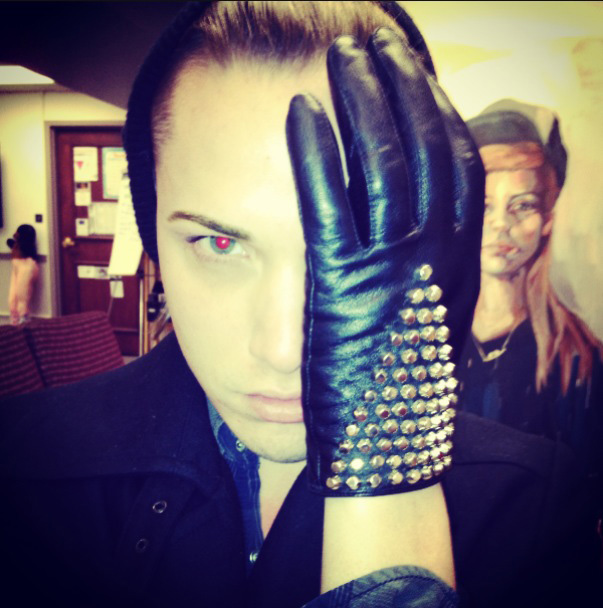
Hi miners! Whistle while you work! Do you like my new spiked gloves? I bet you're peanut butter and jealous of them.


So this week, I planned on going to an event posted on the excavations list titled "OkCupid, Match.com, and EHarmony: Exploring Online Dating." I went to the location posted at the correct time and date, and it wasn't a completely different lecture taking place. One I found extremely boring and uninteresting. I wasn't excited. I don't want to throw the student's name under the bus that posted the wrong information but MOLLY KROHE!!!!!!!! Haha.

So I was stuck in a lecture about Indigenous Women's Organizations. This is the guest panel. Jodi Byrd, Lani Teves, and Christine Delisle (from left to right).


Jodi is part of the Chickasaw Tribe in Oklahoma. She went to the University of Iowa for American Indian Studies where her research interests included Indigenous studies and governance. She also researched Indigenous and postcolonial literatures, cultural studies, film, and theory. She has a new book out that argues the necessity of moving beyond a colonial framework in talking about Indigenous features. Next, Lani is a native born and raised in Hawaii. She received a masters in American Studies there. Her dissertation, "We're All Hawaiians Now: Culture, Indigeneity, Performance, and Politics of Aloha" focuses on the ways in which the representational strategies of Hawaiian performers can gain political and federal recognition. Lastly, Christine was born and raised in Guam. She taught at schools in Guam before moving to teach in Michigan and Illinois. One of her main concerns about Guam today consist of the military buildup and protests there that effect her Chamorro Tribe.

This lecture mainly spoke about the common organization these indigenous women belong to called "Idle No More". This organization explores local efforts to organize in solidarity with undocumented people in the United States. It's a social networking movement that was started by Indigenous women that organized local issues. The group has had much success, including breaking a Canadian Bill protecting Indigenous places. This group was started through Facebook, teach-ins, and Twitter. Then, a hunger strike took place that got nationwide recognition. Many people learn about their organization through social media. Without the social media, they believe that they wouldn't get any recognition as natives. This movement has not yet hit Guam where Christine lives. Christine strongly believes in the colonialism theory: Other tribes bring in people, they bring native things, and the rest of the area becomes accustomed to them and the tribes grow. She wants to use this "contagious" approach to expand the indigenous cultures. "Idle No More" is such a powerful organization because it's non violent in its way of changing the world. 

In the history of organizing their culture, women were always in the forefront of saving indigenous lands and tribes. Lani spoke about how women in Hawaii have to stay strong and be the rock in their community especially when times get rough. One of the hardest times was when the government sent their tribe a "Sorry Letter" for overthrowing their Chief. At times like that, it was hard for the men to not get violent. she stated: "We have an apology letter to build our land and tribes on. What are we supposed to do with that?" The women get together with "Idle No More" in order to keep sanity and tranquility in their tribe. 

Indigenous feminism is an issue too. Any indian man who marries a white settler can move onto the reserve. In contrast, any indian woman who marries into a white settler must leave the reserve and move away with the settler. These three women try to rework what gender means in indigenous culture. This is about women, and there is nothing the men can do to operationalize it. 

The White environmental movements have become an enemy to Hawaii. There is an ongoing reliance on military and food costs due to the white movements. Christine thinks they don't need the white movements, and she wishes they didn't spend money on the U.S. goods that get shipped to them. They can get fish from the ocean and live off the land to lower living prices. With "Idle No More", the tribes need to come together to question the priorities of indigenous living. 

Well, I hope you find this all interesting, because I don't! 

And if you're wondering, this is what I would look like if I were the Chief of my tribe. 


See you next week!!!

Mwuah <3
Tweet This

Monday, February 18, 2013

Social-Personality: Brown Bag Lecture

Hi my little miners! How are you doing cause I wanna know? I have no idea what a brown bag lecture is, but I went to one. For me, I brought a brown bag in case I needed to throw up in it because I was so hungover. I hid incognito in the back of the class. 


This is Kisha Jones. Her entire lecture was about a theory called Adverse Impact, which is the selection ratio of any race, gender, or sexuality of any minority group getting jobs in America. She didn't talk about anything but black vs. white hirings, and to me it seemed pretty ignorant. 


I wasn't the only one. This lecture turned into a huge debate. Especially between her and these wise guys on this side of the room. They thought her research and points were inaccurate and unfair to make any sort of hypothesis. They seemed to know more information and statistics than she did. They pretty much burned her at the stake.


There was a lot of shade, eye rolling, and huffing and puffing going on. But what did I learn. Well, the U.S. is trying attempting to reverse the Adverse Impact in order to create a more diverse workplace. They do this in two studies. One, the Predictor: Cognitive ability tests were set in place instead of face to face interviews. This gives the companies a chance to hire based on intellect and not appearance. Second, the Criterion: The companies take job performance solely into consideration while hiring. They would hire people as interns and promote them with a job if they were great at what they did. However,  Kisha believed that the Criterion theory actually creates a higher waving adverse impact. She believes in the Supply Side Perspective. In this, minority and majority applicants should be as similar as possible in knowledge when applying for jobs. This leads to targeted diversity recruiting, where companies seek out different races to work for them and decreases adverse impact. The wise guys listening in on the lecture did not like this idea, and thought it was completely over the top and stupid. 

She went on to something I thought finally made sense: Vocational Interests. Jobs should be chosen by the applicant based on what kind of personality you have taking into consideration your situations, contexts, behaviors, and interests. This is based on Holland's Theory of Personalities in the Work Environment. (Graph Below)

Interests start in childhood. Her studies showed that men are stronger in the realistic section, and women more in the social. Black and white people showed differences as well. Black people rated high in social, enterprising, and conventional sections. White people then increased in realistic, investigative, and artistic sections. This through the wise guys over the edge and the debate began. She defended her research by stating that growing up, a black child develops a racialized schemata and bias of jobs Then, they age into race-based stereotypes from media and their surroundings in America. After this, they conclude their biases. I also thought that was a load of bullshit. We are all people, made up of the same DNA. We all need jobs, and we'll all get them if qualified. The end.

Oh, and one for the road. Me last night before I was hungover and threw up in my brown paper bag lecture.  


Kisses! See you next week.

MWUAH <3


Tweet This